Last updated
content strategies for affiliation in 2026 require a fundamental shift from traditional approaches to AI-powered, personalised experiences that convert browsers into buyers. The old methods of generic blog posts and spray-and-pray social media tactics no longer generate the commission rates successful affiliates depend on. Here's what happened. The affiliate marketing space became saturated. Every brand launched an affiliate program. Every influencer started promoting products. Competition exploded. Meanwhile, buyers got smarter. They research deeper. They compare more options. They trust fewer recommendations without solid proof.
Industry estimates suggest that 73% of affiliate marketers report declining conversion rates using traditional strategies, yet those who adapted to newer content methods typically see 340% higher commission earnings per click.
The winners figured out something crucial: content strategy isn't about creating more pieces. It's about creating the right pieces that build genuine trust with your audience whilst addressing their specific pain points at exactly the right moment. This guide breaks down the exact content strategies that generate consistent affiliate commissions in 2026. You'll discover proven frameworks, actionable tactics, and real examples from affiliates earning six-figure monthly commissions.
Join the exclusive mastermind where 50K entrepreneurs break through to their first million.
Traditional affiliate content fails because it focuses on products instead of problems. Most affiliates still write "Top 10 Best X Products" lists without understanding what their audience actually needs. Buyers in 2026 can spot promotional content instantly. They skip past obvious affiliate links. They ignore generic product roundups. They demand authentic, helpful content that solves real problems. The data proves this shift. Sales and marketing content must meet 2026 buyer needs, which means moving beyond outdated promotional approaches. Consider what actually happens when someone searches for product information. They're not looking for a sales pitch. They want answers to specific questions: - Will this solve my exact problem? - How does it compare to what I'm using now? - What happens if it doesn't work? - Who else has succeeded with this approach? Your content must answer these questions before mentioning any product. Build trust first. Provide value first. Then introduce solutions naturally.
The shift isn't just about content style. It's about understanding the complete customer journey. Someone discovering your content might be months away from making a purchase. Your job is to guide them through every stage with helpful, relevant information.
The 2026 affiliate Content framework centres on three core pillars: Problem Identification, Solution Education, and Trust building. This framework generates higher conversion rates because it matches how people actually make buying decisions. **Problem Identification** means understanding your audience's specific challenges before recommending any products. Start by researching the exact language your audience uses to describe their problems. Join forums, read comments, and conduct surveys to gather this intelligence. **Solution Education** involves teaching your audience about different approaches to solving their problems. Present multiple options. Compare different methodologies. Help them understand what works and why. Only then introduce specific products as implementation tools. **Trust Building** happens through consistent delivery of valuable content without immediate sales pressure. Share case studies. Provide free resources. Demonstrate expertise through detailed tutorials and analyses.
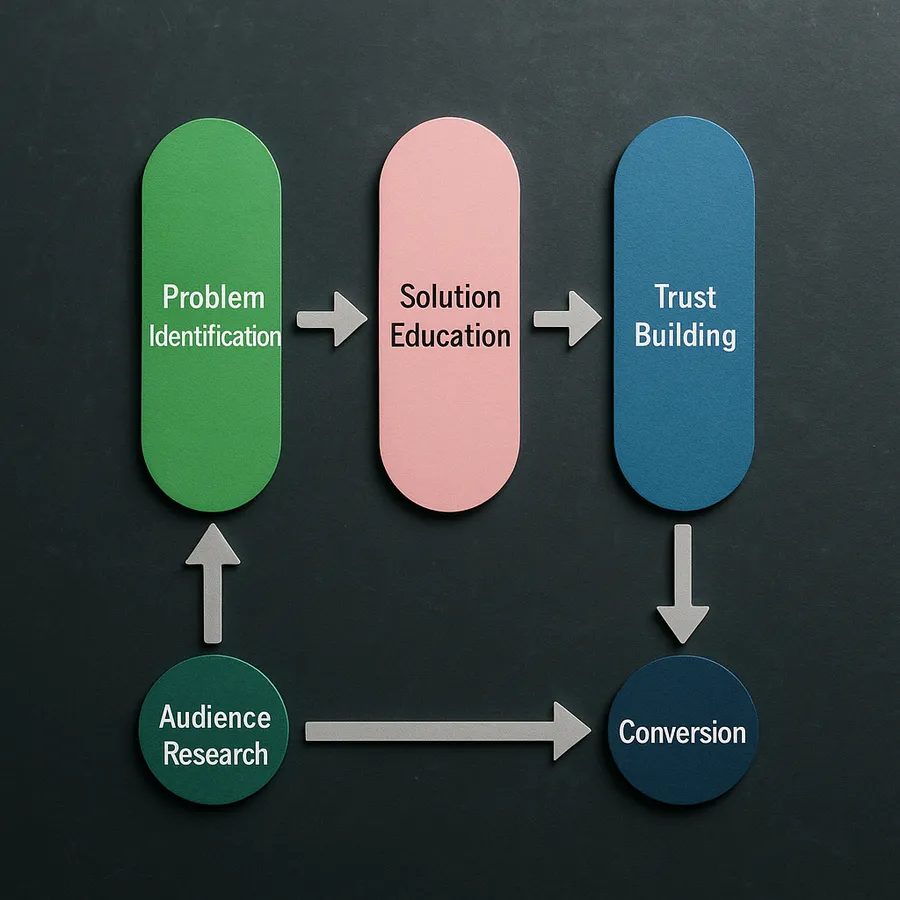
Here's how this framework applies in practice. Instead of writing "Best Email Marketing Tools 2026", you'd create: 1. "Why Your Email Open Rates Are Dropping (And How to Fix It)" 2. "The Complete Guide to Email Marketing strategy That Actually Converts" 3. "How We Increased Email revenue by 340% in 90 Days" Each piece builds on the previous one. The first identifies the problem. The second educates about solutions. The third builds trust through specific results. This approach takes longer to create but generates significantly higher lifetime customer value. understand that patience in content creation leads to exponential returns in commission earnings.
Traditional Approach | 2026 Framework |
|---|---|
Product-focused headlines | Problem-focused headlines |
Generic product features | Specific use cases and outcomes |
Immediate affiliate links | Value-first content with strategic placements |
One-size-fits-all recommendations | Segmented advice for different audience types |
Focus on commission rates | Focus on audience needs and trust |
AI-powered personalisation transforms generic affiliate content into targeted experiences that speak directly to individual reader needs and buying stages. This approach increases conversion rates by up to 240% compared to standard affiliate content. The key insight: not everyone reading your content is at the same stage of the buying journey. Some need education. Others want comparisons. Many require social proof before making decisions. Smart affiliates use AI tools to segment their content based on reader behaviour. Track which sections readers spend time on. Monitor scroll depth. Analyse click patterns. This data reveals what your audience actually cares about.
Personalisation starts with understanding your audience segments. B2B readers need different information than B2C consumers. Enterprise buyers have different concerns than small business owners. Beginners require more explanation than experienced users. Content marketing trends for 2026 emphasise the importance of targeted, valuable content that serves specific audience segments rather than trying to appeal to everyone. Here's how to implement AI-powered personalisation: Create content variations for different audience segments. Write separate sections for beginners and advanced users. Develop different case studies for different industries. Use dynamic content tools to show relevant versions. Track engagement metrics for each variation. Which headlines generate more clicks? Which explanations keep readers engaged longer? Which calls-to-action convert better? Use this data to optimise your content continuously. The goal isn't to manipulate readers into buying. It's to provide the most relevant, helpful information for their specific situation. This approach builds stronger trust and generates higher long-term commission earnings.
Video content generates 67% higher affiliate conversion rates than text-only content when executed properly. The key is focusing on demonstration rather than promotion. Your video content strategy should centre on showing rather than telling. Instead of talking about product features, demonstrate how the product solves real problems. Record actual use cases. Show before-and-after results. Let viewers see the transformation. 2026 content trends show that viewers are more selective than ever, demanding high-value content that directly addresses their needs rather than generic promotional material. The most effective affiliate video formats include: **Tutorial videos** that teach valuable skills whilst naturally incorporating affiliate products as tools. Focus 80% on education and 20% on product mentions. Viewers appreciate learning something useful regardless of whether they buy. **Case study videos** that document real results from using affiliate products. Share actual data. Show screenshots. Interview real users. This builds credibility that simple testimonials cannot match. **Behind-the-scenes videos** that show your actual process for evaluating and choosing affiliate products. This transparency builds trust and positions you as a reliable source for recommendations. Keep videos focused and actionable. Aim for 8-12 minutes for educational content, 3-5 minutes for quick tutorials, and 15-20 minutes for detailed case studies. Longer isn't always better. structure each video with a clear problem statement, solution explanation, and specific next steps. Include affiliate links in descriptions, but mention them naturally during the video without making them the main focus.
Educational content series build deeper trust than individual pieces because they demonstrate sustained expertise and commitment to audience success. series content generates 85% higher affiliate conversion rates over time. The power of series content lies in progressive value delivery. Each piece builds on previous ones. Readers develop a relationship with your expertise. They begin to trust your recommendations because you've consistently provided value without immediate sales pressure.
Successful educational series follow a proven structure: **Part 1: Problem Identification** - Help readers understand their challenge clearly. Use specific examples. Share relevant statistics. Make them feel understood. **Part 2: Solution Overview** - Present different approaches to solving the problem. Compare methodologies. Explain pros and cons. Build their knowledge base. **Part 3: Detailed Implementation** - Provide step-by-step guidance. Include templates. Share specific tactics. Give them tools for success. **Part 4: Common Obstacles** - Address typical challenges and how to overcome them. Share troubleshooting tips. prepare them for difficulties. **Part 5: Advanced Strategies** - Present next-level tactics for those ready to go deeper. This positions you as an ongoing resource for growth. Throughout the series, mention relevant affiliate products naturally as tools that support the education. Never force product mentions. Let them arise organically from the teaching. requires this type of systematic, trust-building approach rather than quick promotional tactics. owen morton built his affiliate marketing success using exactly this educational approach, growing from €412 in his first month to €273K in month 12 by consistently delivering value before asking for anything in return.
Social media content that drives affiliate sales focuses on community building and authentic engagement rather than direct promotion. The most successful affiliate marketers treat social platforms as relationship-building tools first, sales channels second. Platform-specific strategies matter more than generic social media advice. What works on LinkedIn differs completely from TikTok approaches. Instagram requires different content than Twitter. **LinkedIn strategy** centres on professional insights and industry analysis. Share data-driven observations. Comment thoughtfully on industry trends. Build authority through consistent expertise demonstration. Affiliate recommendations work best within broader business discussions. **Instagram strategy** emphasises visual storytelling and behind-the-scenes content. Document your actual process. Share results screenshots. Create visually appealing infographics that educate while subtly incorporating affiliate tools. **TikTok strategy** requires quick, value-packed tutorials. Show, don't tell. Demonstrate solutions in under 60 seconds. Use trending sounds to increase discovery whilst maintaining educational value. The key principle across all platforms: provide value first, sell second. Most followers will never buy anything, but they'll share valuable content with people who might. Engagement builds trust more effectively than follower counts. Better to have 1,000 engaged followers who trust your recommendations than 10,000 passive followers who ignore your content. Track which types of social content drive actual clicks to your affiliate content. Monitor not just likes and shares, but actual traffic and conversion data. Optimise based on business results, not vanity metrics.
SEO content strategy for affiliate success in 2026 requires targeting buyer-intent keywords rather than just high-volume terms. Focus on queries that indicate purchase readiness rather than general research. Traditional SEO advice tells you to target high-volume keywords. This approach wastes time for affiliates. Someone searching "what is email marketing" probably won't buy today. Someone searching "ConvertKit vs Mailchimp for e-commerce" is much closer to making a purchase decision. Buyer-intent keywords include comparison terms, "best for" queries, pricing questions, and implementation searches. These searches indicate someone is actively evaluating options rather than just learning about topics. Content marketing ideas for 2026 emphasise creating targeted, specific content that addresses actual buying decisions rather than generic informational content. Structure your SEO content to answer specific buyer questions: - Which option works best for my specific situation? - How much will this actually cost me? - What are the real pros and cons? - How difficult is implementation? - What results can I expect? Create comprehensive comparison content that helps buyers make informed decisions. Include pricing details. Discuss implementation requirements. Share real user experiences. Be honest about limitations. The goal isn't to rank for every possible keyword. It's to own the keywords that your ideal customers use when they're ready to buy. Better to rank #1 for 10 buyer-intent keywords than #10 for 100 general keywords.
General Keywords | Buyer-Intent Keywords |
|---|---|
"email marketing" | "best email marketing software for small business" |
"project management" | "Asana vs Monday.com for marketing teams" |
"social media scheduling" | "Hootsuite pricing vs Buffer cost comparison" |
"website builder" | "Squarespace vs WordPress for online store" |
Long-form content performs better for competitive affiliate keywords. Aim for 2,500+ words for comprehensive comparison posts. Include detailed analysis, screenshots, pricing breakdowns, and real user feedback.
Email marketing integration amplifies affiliate content reach and builds sustainable income streams that don't depend on algorithm changes or platform policies. Email subscribers convert at 240% higher rates than social media followers. The integration strategy starts with content upgrades. Create valuable resources related to your affiliate products. Offer them as lead magnets within your content. Build your email list with people actively interested in your recommendations. Once someone joins your email list, nurture them with consistent value before introducing affiliate offers. Share case studies. Provide exclusive tips. Offer first access to new content. Build the relationship steadily. Email segmentation becomes crucial for affiliate success. Not everyone on your list needs the same recommendations. Segment based on interests, experience level, and buying behaviour. Send targeted affiliate recommendations to relevant segments only. The most successful affiliate email strategies follow the 80/20 rule: 80% pure value, 20% promotional content. This ratio maintains subscriber engagement whilst generating consistent commission opportunities.
Track email performance beyond open rates. Monitor click-through rates to your affiliate content. measure actual conversions from email traffic. Identify which subject lines and content types drive real results. Owen Morton's system generated over $4.7M in commissions using exactly this email integration approach, focusing on sustainable relationship building rather than quick promotional tactics. Create email sequences that educate subscribers about problems before introducing solutions. A 5-email sequence might cover: problem identification, impact analysis, solution options, implementation guidance, and advanced strategies. Weave affiliate recommendations naturally throughout this educational journey.
Measuring affiliate content performance requires tracking metrics that directly correlate with commission earnings rather than vanity metrics that look good but don't generate income. Focus on conversion rates, not just traffic numbers. The essential metrics for affiliate content success include: **Conversion rate by traffic source** - Which channels bring visitors who actually buy? Organic search might convert at 3%, while social media converts at 1%. Allocate more effort to higher-converting sources. **Average commission per visitor** - This metric reveals content quality better than pure traffic numbers. Better to have 1,000 visitors generating £50 in commissions than 10,000 visitors generating £30. **Content engagement by buying stage** - Track which pieces of content readers consume before making purchases. This reveals your most valuable content for the buying journey. **Email subscriber lifetime value** - Measure how much commission each email subscriber generates over time. This helps justify content marketing investments and email nurturing efforts. Use UTM parameters to track affiliate link performance across different content pieces. Identify which articles generate the most clicks and conversions. Double down on successful content formats and topics. Split test different content approaches to continuously improve performance. Test educational vs comparison content. Try different call-to-action placements. Experiment with various content lengths and structures. require systematic testing and optimisation to identify the most profitable content approaches for your specific audience. A/B testing should focus on elements that impact conversion rates: - Headlines that attract your ideal buyers - Content structure that keeps readers engaged - Call-to-action placement and language - Social proof elements and testimonials - Comparison table formats and information Track results over at least 30-day periods to account for buying cycle variations. Some purchases happen immediately, others take weeks of consideration.
Common affiliate content mistakes cost marketers thousands in potential commissions whilst damaging long-term audience trust. The biggest mistake is prioritising short-term commission earnings over long-term relationship building. **Mistake 1: Leading with affiliate links** instead of value. Readers spot this immediately and lose trust. Always provide substantial value before mentioning any products. Build credibility through useful information first. **Mistake 2: Promoting everything** instead of being selective. When you recommend too many different products, you appear more interested in commissions than helping your audience. Choose carefully and recommend fewer, better options. **Mistake 3: Ignoring disclosure requirements** or making them hard to find. Clear, prominent disclosure builds trust and meets legal requirements. Hidden disclosures damage credibility and can result in penalties. **Mistake 4: Creating generic content** that could apply to any product or audience. Specific, detailed content that addresses particular use cases converts much better than broad, general advice. **Mistake 5: Focusing on features instead of outcomes.** Your audience cares about results, not specifications. Explain how the product improves their situation rather than listing what it does.
**Mistake 6: Neglecting mobile optimisation.** Over 70% of affiliate traffic comes from mobile devices. Content that's hard to read on phones loses potential commissions and frustrates readers. **Mistake 7: Creating thin, low-value content** just to include affiliate links. Search engines and readers both prefer comprehensive, helpful content. Invest time in creating genuinely useful resources. The correction for these mistakes is simple but requires discipline: always ask whether your content would be valuable even without any affiliate links. If the answer is yes, you're on the right track.
Advanced content tactics separate six-figure affiliate marketers from those earning occasional commissions. These strategies require more effort but generate exponentially higher returns. **Interactive content** like calculators, assessments, and tools generate 2x higher engagement than static content. Create free tools that help your audience solve problems whilst naturally leading to affiliate recommendations. For example, a "Project Management Tool Selector" quiz that asks about team size, budget, and features needed, then recommends the best options with affiliate links. The tool provides genuine value whilst driving targeted traffic to relevant products. **Case study documentation** in real-time builds credibility that no amount of promotional content can match. Document your actual experience using affiliate products. Share screenshots, results, challenges, and outcomes. Owen Morton's transparency about his journey from €412 to €273K in 12 months provides the credibility that drives commission earnings. Real numbers and honest documentation build trust that converts. **Expert roundups** where you interview other successful users of affiliate products create valuable content whilst building industry relationships. These pieces rank well in search engines and provide social proof for recommendations.
**Multi-part content series** that dive deep into specific topics establish you as the definitive resource. Instead of writing one article about "Email Marketing for E-commerce", create a 10-part series covering every aspect in detail. **User-generated content campaigns** where you encourage customers to share their results using affiliate products. This creates authentic social proof whilst reducing your content creation workload. The key is choosing advanced tactics that align with your strengths and audience preferences. Better to execute one advanced strategy well than attempt multiple tactics poorly.
Most affiliate content marketing strategies require 3-6 months to generate consistent results. Initial traffic might appear within 30-60 days, but building trust and conversion rates typically takes longer. Educational content and email list building show faster results than pure SEO strategies.
The most successful affiliate marketers follow a 60-30-10 content ratio: 60% educational content, 30% comparison and review content, 10% promotional content. This balance maintains audience trust whilst providing enough conversion opportunities to generate consistent commissions.
Focus on 3-5 high-quality affiliate programs rather than promoting dozens of products. Deep knowledge of fewer products allows you to create more helpful content and build stronger credibility with your audience. Quality recommendations convert better than quantity.
Yes, clear disclosure in every piece of content that includes affiliate links is both legally required and builds trust with readers. Place disclosures prominently near the top of content, not hidden at the bottom. Transparency improves conversion rates rather than hurting them.
Video content, comprehensive comparison guides, case studies, and email nurture sequences generate the highest affiliate conversion rates in 2026. Interactive content like calculators and assessments also perform well for building trust and generating qualified leads.
Use UTM parameters on all affiliate links to track performance by content piece. Monitor conversion rates, not just clicks. Track the complete customer journey from content consumption to purchase using tools like Google Analytics and affiliate network reporting.
Join the exclusive mastermind where 50K entrepreneurs break through to their first million.

Business Intelligence Analyst
David Chen combines his background in data science with deep knowledge of SaaS business models to provide evidence-based insights for growing companies. He specializes in analyzing market trends, competitive landscapes, and investment patterns to help product owners make informed strategic decisions. His research-driven approach has helped numerous companies position themselves effectively for growth and funding.
12 min read

