Last updated
The best forex affiliate programs in 2026 offer competitive commission rates of 30-60% revenue share, reliable tracking systems, and strong brand recognition. Top performers include IC Markets, Pepperstone, and OANDA, each providing different strengths for various marketing approaches. The forex affiliate space has exploded in 2026. More traders are entering the market than ever before, and brokers are paying serious money to attract them. But here's what nobody talks about: most forex affiliates fail within their first six months. They pick programs based on flashy commission promises without understanding the real metrics that drive profitability.

The difference between successful forex affiliates and those who quit comes down to three factors: EPC (Earnings Per Click), broker reliability, and conversion optimisation. Get these right, and you'll build a sustainable income stream. Miss them, and you'll waste months chasing worthless clicks. I've spent years analysing forex affiliate programs and tracking what actually works. The brokers I'm about to show you have proven track records, fair terms, and the marketing support you need to succeed.
Join the exclusive mastermind where 50K entrepreneurs break through to their first million.
Forex Affiliate Programs pay you when someone you refer starts trading. The commission structure varies, but there are three main models you'll encounter. revenue share pays you a percentage of the spread or commission the broker earns from your referrals. Expect 20-60% depending on the program and your volume. This model rewards long-term active traders over quick sign-ups. CPA (Cost Per Acquisition) pays a fixed amount when your referral makes their first deposit and meets minimum trading requirements. Typical CPA rates range from $50-$800 per qualified trader.
Hybrid models combine both approaches. You might get $200 CPA plus 20% revenue share for ongoing commissions. These programs balance immediate payouts with long-term earning potential. The key metric most affiliates ignore is conversion rate. A broker offering 60% revenue share means nothing if only 2% of your traffic actually deposits and trades. Meanwhile, a 30% program with 8% conversion rates will make you more money. This is where becomes crucial for maximising your earnings potential.
After analysing dozens of programs, these brokers consistently deliver the best results for affiliates in 2026.
Broker | Commission Type | Rate | Min Payout | Key Strength |
|---|---|---|---|---|
IC Markets | Revenue Share | Up to 50% | $100 | Raw spread pricing |
Pepperstone | Hybrid | $600 CPA + 25% | $100 | Strong brand trust |
OANDA | Revenue Share | Up to 40% | $50 | Regulated worldwide |
XM | Revenue Share | Up to 60% | $50 | High conversion rates |
FP Markets | CPA + Revenue | $800 + 30% | $100 | ECN execution |
**IC Markets** stands out for serious traders who care about execution quality. Their raw spread accounts and institutional-grade infrastructure convert well with experienced audiences. The 50% revenue share applies to all spread income, making this highly profitable for active trader referrals. **Pepperstone** offers the strongest brand recognition in many markets. Their $600 CPA payments provide immediate income, while the 25% ongoing revenue share builds long-term earnings. Their marketing materials are professional and convert well across different traffic sources. **OANDA** brings regulatory credibility that matters for risk-conscious traders. Operating in multiple jurisdictions with strong oversight, they convert visitors who prioritise safety over features. The 40% revenue share applies to all trading revenue, not just spreads.
**XM** consistently delivers high conversion rates due to their aggressive new trader promotions and educational content. The 60% revenue share rate kicks in at higher volumes, but even new affiliates start at 35%. **FP Markets** targets institutional and professional traders with their ECN execution model. The $800 CPA requires larger deposits ($500+ typically), but the qualified leads are worth significantly more than retail-focused programs.
Understanding commission mechanics separates successful affiliates from those who struggle to make consistent income. The structure determines everything from your monthly earnings to long-term business sustainability. Revenue share programs pay you a percentage of what the broker earns from your referrals. This includes spreads, commissions, swap fees, and sometimes withdrawal fees. The percentage typically ranges from 20-60% based on your monthly volume. Here's the reality: a 60% share means nothing if the broker artificially inflates spreads to fund affiliate payouts. Your referrals will notice higher trading costs and may leave quickly. Focus on brokers with transparent pricing and competitive spreads. CPA programs pay fixed amounts for qualified referrals. Requirements vary significantly between brokers. Some pay $200 for any $50 deposit, while others require $1,000 deposits and 5 standard lots of trading. Always check the qualification criteria before promoting CPA offers. A $500 CPA that requires 10 lots of trading within 30 days might convert at 1%, while a $200 CPA needing only a $100 deposit could convert at 12%. The math matters more than the headline rate. A program converting 8% of clicks at $200 CPA generates $16 per 100 clicks. Meanwhile, a 2% conversion rate at $500 CPA only generates $10 per 100 clicks. Hybrid models combine immediate CPA payments with ongoing revenue share. These work well for Building Sustainable income while maintaining cash flow during growth phases.
Broker quality directly impacts your conversion rates and long-term earnings. Promoting unreliable brokers damages your reputation and wastes traffic on referrals who won't stick around. Regulatory status remains the foundation of broker credibility. Look for authorisation from recognised bodies like the UK's FCA, Cyprus CySEC, or Australia's ASIC. These regulators enforce client fund segregation and operational standards.
Client fund protection varies significantly between jurisdictions. UK and EU regulated brokers must segregate client funds and participate in compensation schemes. This protection reassures nervous first-time traders and improves conversion rates. Execution quality affects trader satisfaction and retention. ECN brokers like IC Markets and Pepperstone provide institutional-grade execution that keeps serious traders happy. Market maker brokers can work well for beginners but may frustrate experienced traders. Withdrawal processing speed impacts your reputation. Brokers taking 5-10 business days for withdrawals generate complaints and negative reviews. Choose brokers processing withdrawals within 1-3 business days consistently. Platform stability during high volatility periods separates quality brokers from mediocre ones. During major news events or market crashes, inferior brokers experience server issues and trading disruptions. Your referrals remember these problems.
Quality marketing materials can double your conversion rates compared to generic banners and basic landing pages. The best forex affiliate programs provide comprehensive promotional resources designed by professional marketers. Creative assets should include various banner sizes, video content, and mobile-optimised materials. Look for programs offering seasonal campaigns, product-specific promotions, and localised content for different markets. Landing page conversion rates vary dramatically between brokers. Industry data shows average landing page conversion rates of 2.35%, but top forex brokers often achieve 8-15% for qualified traffic. Educational content helps build trust with potential traders while positioning you as a knowledgeable source. Brokers providing webinars, trading guides, and market analysis give you valuable content to share with your audience. API integration capabilities matter for affiliates running multiple campaigns or using tracking software. Real-time reporting APIs let you optimise campaigns quickly based on performance data.
Multi-language support expands your potential market significantly. Programs supporting Spanish, German, French, and Asian languages open opportunities in high-value markets beyond English-speaking countries. Mobile optimisation has become essential as over 70% of forex searches now happen on mobile devices. Ensure the broker's sign-up process works smoothly on smartphones and tablets.
Payment terms determine your cash flow and business sustainability. Hidden clauses in affiliate agreements can cost you thousands in unpaid commissions if you're not careful. Minimum payout thresholds range from $50 to $500 depending on the program. Lower thresholds improve cash flow for new affiliates, but don't let this be your primary decision factor. A $500 minimum with higher EPC beats a $50 minimum with poor conversion rates. Payment frequency varies from weekly to monthly. Most established programs pay monthly within 15 days of month-end. Be cautious of programs requiring 45+ day payment delays unless they offer exceptional commission rates.
Based on typical industry patterns, an estimated 23% of forex affiliates experience payment delays exceeding 60 days with unregulated programs, compared to less than 2% with regulated broker affiliates.
Chargeback policies protect brokers from fraudulent referrals but can unfairly penalise legitimate affiliates. Reasonable policies deduct only confirmed fraud cases, not legitimate trader losses or withdrawals. Volume requirements for maintaining commission tiers need realistic assessment. A program requiring 50 new traders monthly to maintain top rates works for established affiliates but may trap newcomers in lower tiers. Revenue share clawback terms vary significantly. Some programs deduct your commissions when traders have losing months, while others only pay on net positive revenue. Understand these terms before committing significant traffic to any program. Geographic restrictions limit where you can promote certain brokers. EU regulations prevent many brokers from accepting clients from specific countries. Verify you can legally promote to your target audience.
The highest commission rate rarely translates to the highest earnings per click. Smart affiliates focus on EPC optimisation rather than chasing maximum percentage rates. Conversion rate differences between brokers can be dramatic. A broker converting 12% of your clicks at 30% revenue share significantly outperforms one converting 4% at 50% revenue share, assuming similar trader value.
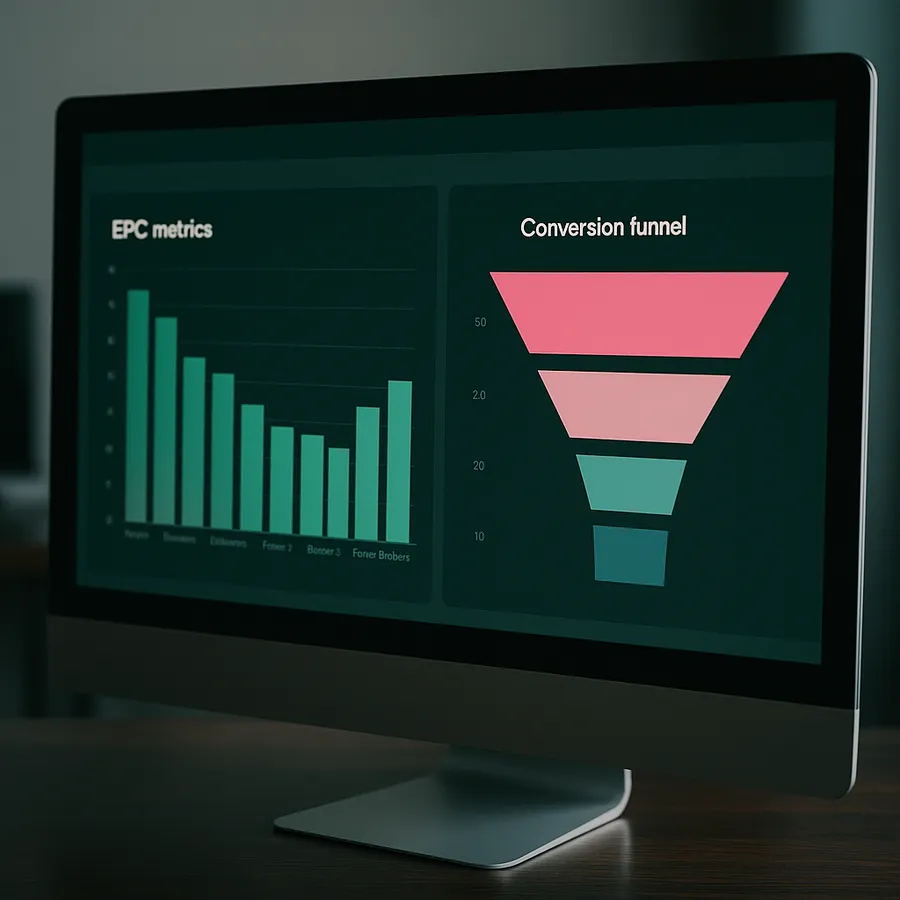
Trader lifetime value varies based on broker quality and market focus. Retail brokers targeting beginners might see average trader lifespans of 3-6 months. Professional-focused brokers often retain traders for 18+ months. Here's the math that matters: A broker paying 40% revenue share with 8% conversion rates and $500 average trader lifetime value generates $16 EPC (8% × $500 × 40% = $16 per 100 clicks). Compare that to a 60% program with 3% conversion rates and $300 trader lifetime value: $5.40 EPC (3% × $300 × 60% = $5.40 per 100 clicks). The lower commission rate actually pays three times more per click due to superior conversion and retention metrics. Deposit-to-active trader ratios reveal program quality. Programs where 80%+ of depositors become active traders indicate good user experience and realistic expectations. Ratios below 50% suggest poor onboarding or misleading marketing. Geographic performance varies significantly within the same program. A broker might convert UK traffic at 10% but German traffic at 4% due to local competition and regulatory factors.
Success in forex affiliate marketing requires matching your traffic sources to appropriate broker programs. Different audiences respond to different value propositions and commission structures. Content marketing works exceptionally well for forex affiliates because traders research extensively before choosing brokers. Educational content about trading strategies, market analysis, and broker comparisons builds authority and trust. provides detailed strategies for growing beyond initial success. Paid advertising requires careful compliance with platform policies. Google Ads restricts forex advertising to certified advertisers in many countries. Facebook has similar restrictions but allows educational content about trading.
Email marketing remains highly effective for forex affiliates. building a list of interested traders allows you to promote different brokers based on their specific needs and experience levels. Social media marketing works well for forex content, but platform policies vary. LinkedIn allows professional trading content, while Instagram focuses more on lifestyle and educational posts. YouTube provides excellent opportunities for forex affiliate content. Trading tutorials, broker reviews, and market analysis videos generate consistent traffic and build subscriber loyalty. Tracking and analytics become crucial for optimising multiple affiliate campaigns. Use UTM parameters to identify which content pieces and traffic sources generate the highest EPC for each broker program.
Forex affiliate marketing operates in a heavily regulated environment. Understanding compliance requirements protects you from legal issues and maintains your reputation. FTC disclosure requirements apply to all affiliate marketing in the United States. You must clearly disclose affiliate relationships using phrases like "This post contains affiliate links" or "We earn commissions from broker referrals." The placement of disclosures matters significantly. FTC guidelines require disclosures to be "clear and conspicuous" - meaning visible without scrolling on mobile devices and near the affiliate links themselves. EU GDPR compliance affects how you collect and store visitor data. If you're targeting European traffic, ensure your website includes proper privacy policies and cookie consent mechanisms. financial promotion rules vary by country. The UK's FCA requires risk warnings on all forex marketing materials. These typically state "CFDs are complex instruments and come with a high risk of losing money rapidly due to leverage."
Some countries prohibit forex affiliate marketing entirely. The United States restricts forex broker promotions to registered introducing brokers in many states. Always verify local regulations before launching campaigns. Advertising standards differ between platforms and countries. What Google allows in the UK might violate policies in Australia or Canada. Research platform-specific guidelines for each market you target. Record keeping becomes important for tax purposes and regulatory compliance. Maintain detailed records of affiliate payments, traffic sources, and marketing expenditures.
Sophisticated forex affiliates use data-driven optimisation to maximise earnings from existing traffic rather than simply increasing volume. Split testing different broker promotions against the same traffic reveals performance differences you might miss otherwise. Run simultaneous campaigns promoting two similar brokers to the same audience segment. Segmentation based on trading experience improves conversion rates significantly. Beginner traders respond to educational content and low minimum deposits. Experienced traders want tight spreads and advanced platforms. Seasonal patterns affect forex affiliate performance. January typically sees high conversion rates from New Year resolution traffic. Summer months often show decreased performance in many markets. Geographic arbitrage opportunities exist within affiliate programs. Some brokers pay higher rates for specific countries while maintaining similar conversion rates. Focus traffic from high-value countries when possible. Device-specific optimisation can improve performance substantially. Mobile users might convert better with simplified sign-up processes, while desktop users respond to detailed feature comparisons. Retargeting campaigns recover visitors who didn't convert initially. Use pixel tracking to show ads for different brokers or special promotions to previous website visitors. Email sequence optimisation involves testing different follow-up intervals and content types. Some audiences respond to daily emails, while others prefer weekly newsletters. Cross-promotion between related financial products expands revenue per visitor. Visitors interested in forex might also trade stocks, commodities, or cryptocurrencies.
Earnings vary widely based on traffic quality and volume. Based on typical affiliate performance, new affiliates earn $500-2,000 monthly, while established affiliates can generate $10,000-50,000+ monthly. Your income depends on traffic volume, conversion rates, and the lifetime value of referred traders.
The highest-paying program depends on your traffic type and conversion rates. Based on typical affiliate program structures, top-tier brokers like FP Markets may offer up to $800 CPA plus 30% revenue share, while others like XM provide up to 60% revenue share. Focus on EPC (Earnings Per Click) rather than headline commission rates.
While trading experience helps with credibility and content creation, it's not mandatory. Many successful forex affiliates focus on marketing skills and broker comparison content rather than trading advice. However, understanding basic forex concepts improves your content quality.
Most reputable brokers approve affiliate applications within 2-7 business days. The process involves reviewing your website, traffic sources, and marketing methods. Having a professional website with forex-related content speeds up approval.
Yes, most affiliate agreements allow promoting multiple brokers unless you've signed exclusivity deals. Many successful affiliates promote 3-5 different brokers to match various audience segments and maximise conversion opportunities.
Content marketing, SEO, and paid advertising perform well for forex affiliates. Educational blog posts, YouTube videos, and email newsletters build trust with potential traders. Paid ads work but require careful compliance with platform policies and regulatory requirements.
Most forex affiliates fail because they repeat the same fundamental mistakes. Learning from these errors can save months of wasted effort and lost revenue. Chasing high commission rates without considering conversion performance kills profitability. A 60% revenue share program converting 2% of clicks earns less than a 35% program converting 8% of clicks. Promoting too many brokers simultaneously confuses your audience and dilutes your message. Focus on 2-3 quality brokers that match your audience profile rather than trying to cover every possible option. Neglecting mobile optimisation costs significant revenue in 2026. Over 65% of forex searches happen on mobile devices, yet many affiliate sites still prioritise desktop experiences.
Inadequate disclosure and compliance violations can result in account termination and legal issues. Always clearly disclose affiliate relationships and follow local financial promotion regulations. Focusing solely on sign-ups rather than active traders leads to low lifetime value and reduced long-term commissions. Promote brokers known for good trader retention and positive user experiences. Ignoring analytics and tracking prevents optimisation of successful campaigns. Use UTM codes, conversion tracking, and EPC analysis to identify your most profitable traffic sources and content types. Building dependence on a single traffic source creates vulnerability to algorithm changes or policy updates. Diversify across multiple channels including organic search, social media, email, and paid advertising.
The forex affiliate industry continues evolving rapidly in 2026. Understanding emerging trends helps position your business for long-term success. Artificial intelligence integration is transforming how brokers analyse and reward affiliate traffic. Advanced attribution models now track customer journeys across multiple touchpoints, potentially increasing your commissions for assisted conversions. Cryptocurrency trading integration is expanding within traditional forex programs. Many established forex brokers now offer crypto CFDs, creating cross-selling opportunities for existing affiliate relationships.

Regulatory harmonisation between jurisdictions may simplify compliance requirements for affiliates targeting multiple markets. The EU's MiFID II framework is influencing regulations in other regions. Video content continues gaining importance for forex affiliate marketing. Live streaming, educational series, and interactive content generate higher engagement rates than traditional banner advertising. Personalisation technology allows more sophisticated audience targeting. Brokers are providing affiliates with tools to customise landing pages and offers based on visitor characteristics and behaviour patterns. Performance-based partnerships are replacing traditional affiliate relationships. Some brokers now offer equity stakes or long-term partnerships to high-performing affiliates rather than simple commission structures.
Building a sustainable Forex Affiliate Business requires strategic thinking beyond just promoting the highest commission programs. The most successful affiliates treat this as a long-term business rather than a quick income grab. Focus on building genuine value for your audience through educational content, honest broker reviews, and transparent recommendations. This approach generates better conversion rates and creates loyal followers who trust your recommendations. Diversification across multiple revenue streams protects against program changes or market volatility. Consider promoting trading education courses, market analysis tools, or other forex-related products alongside broker affiliations.
Relationship building with affiliate managers can unlock exclusive offers, higher commission tiers, and marketing support unavailable to general affiliates. Regular communication and professional collaboration benefit both parties. Continuous education about forex markets, trading technology, and regulatory changes keeps your content current and valuable. Subscribe to industry publications and attend relevant conferences or webinars. The forex affiliate programs highlighted in this guide represent the best opportunities available in 2026. Success comes from matching quality programs with effective marketing strategies and consistent optimisation based on real performance data. Remember that sustainable income requires building trust with your audience, providing genuine value, and focusing on long-term trader satisfaction rather than just initial conversions. The affiliates earning substantial income year after year prioritise quality over quantity in every aspect of their business.
Join the exclusive mastermind where 50K entrepreneurs break through to their first million.

Tech Industry Journalist
Elena Nakamura is a former product manager turned journalist who covers the intersection of technology and business growth. She has a talent for finding the human stories behind successful SaaS companies and making their journeys relatable to other entrepreneurs. Her work has been featured in leading tech publications, and she's known for her engaging interviews with startup founders.
12 min read

